
Fire, earth, air or water sign? Find the best houseplants for your element, with light, watering and pet-safety notes checked against ASPCA and RHS.
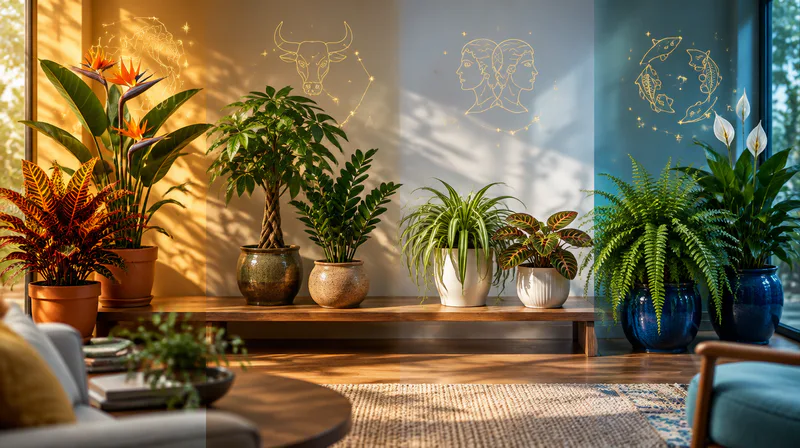
Do you kill every plant you touch, or does your living room look like a jungle? Your habits may predict which plants will thrive. Fire signs forget to water, earth signs keep a schedule, air signs get distracted, and water signs love their plants a little too much.
The best houseplants by zodiac element are: fire signs (Aries, Leo, Sagittarius): croton, bird of paradise, aloe vera and kalanchoe; earth signs (Taurus, Virgo, Capricorn): money tree, ZZ plant, jade plant and snake plant; air signs (Gemini, Libra, Aquarius): prayer plant, parlor palm, spider plant and pothos; water signs (Cancer, Scorpio, Pisces): Boston fern, Phalaenopsis orchid, peace lily and nerve plant.
Matching plants to signs is a playful tradition, not science. The care advice below comes from the Royal Horticultural Society (RHS) and the pet-safety notes from the ASPCA, so the guide works even if you follow your horoscope only for fun. Last reviewed 26 October 2026.
Quick picks by element
| Element | Signs | Care style, and where to start | Best plants | Light | Pet-safe picks |
|---|---|---|---|---|---|
| Fire | Aries, Leo, Sagittarius | Spontaneous and often busy. Start with aloe vera or kalanchoe, which prefer a dry spell between drinks | Croton, bird of paradise, aloe vera, kalanchoe | Your brightest, sunniest window | None. All four are toxic to pets |
| Earth | Taurus, Virgo, Capricorn | Routine-loving and patient. Any of the four will reward steady care | Money tree, ZZ plant, jade plant, snake plant | Flexible: full sun (jade) to shade (ZZ plant) | Money tree |
| Air | Gemini, Libra, Aquarius | Easily distracted, loves unusual looks. Start with the spider plant, which tolerates low light | Prayer plant, parlor palm, spider plant, pothos | Bright, indirect light | Prayer plant, parlor palm, spider plant |
| Water | Cancer, Scorpio, Pisces | Attentive and prone to overwatering out of love. Check the compost before every drink | Boston fern, Phalaenopsis orchid, peace lily, nerve plant | Bright filtered light, humid air | Boston fern, Phalaenopsis orchid, nerve plant |
Fire signs: Aries, Leo and Sagittarius
Fire signs suit bold plants that want the brightest window in the house. All four plants below love light, but they differ sharply in how much water they want.
| Plant | Why it suits fire signs | Light | Watering | Pets |
|---|---|---|---|---|
| Croton (Codiaeum variegatum) | Multi-coloured leaves make it the loudest foliage plant here | Bright but indirect; too little light fades the colour | Water when the top of the compost is dry; needs moist air and a minimum of 15°C | Poisonous; the white sap irritates skin and eyes, so wear gloves |
| Bird of paradise (Strelitzia) | Tall, dramatic and flowering; reaches at least 1.5 m over time | Bright; a large sunny window | Keep compost moist in spring and summer; let it get fairly dry from the end of November | Strelitzia reginae is on the ASPCA toxic list for dogs and cats |
| Aloe vera | Tough, spiky and happy on a hot windowsill | Full light with good ventilation | Never leave the compost wet; use a gritty cactus mix | ASPCA: toxic to dogs, cats and horses (vomiting, lethargy, diarrhea) |
| Kalanchoe (K. blossfeldiana) | Red double flowers in spring on a compact plant up to 0.5 m | Bright filtered light | Water moderately while growing, sparingly when dormant | Harmful if eaten (RHS); on the ASPCA toxic list |
Common fire-sign mistake: watering every plant the same way. Aloe and kalanchoe prefer a dry spell between drinks, while croton and bird of paradise want steadier moisture.
Pet owners: none of these four is pet-safe. For a bright spot with animals around, see the money tree in the earth section.
Earth signs: Taurus, Virgo and Capricorn
Earth signs like dependable, long-lived plants that forgive a missed watering. Most of these four tolerate dry spells, and overwatering is the real danger.
| Plant | Why it suits earth signs | Light | Watering | Pets |
|---|---|---|---|---|
| Money tree (Pachira aquatica) | Sturdy and glossy; unlikely to exceed 1.5 m in a pot | Bright light or partial shade | Moist but well drained | ASPCA: non-toxic to dogs, cats and horses |
| ZZ plant (Zamioculcas zamiifolia) | Tidy, upright and tolerant of neglect | Indirect light to full shade | Check the compost before watering; use a well-drained mix | Harmful if eaten and irritates skin and eyes (RHS); wear gloves |
| Jade plant (Crassula ovata) | Thick leaves and slow, steady growth | Full light; a south- or west-facing window | Lightly moist in spring and summer, very sparingly in winter | ASPCA: toxic (vomiting, diarrhea, low energy) |
| Snake plant (Sansevieria trifasciata) | Upright and architectural; copes with anything from full sun to poor light | Brighter spots grow it better | Only when the compost starts to dry; keep above 10°C | ASPCA: toxic (vomiting, diarrhea, drooling, lethargy) |
Common earth-sign mistake: too much care. Wet compost rots the roots of the jade plant and the snake plant, which dislikes wet conditions.
Pet owners: the money tree is the only pet-safe plant above. The cast iron plant (Aspidistra elatior) is another ASPCA non-toxic choice. The RHS says it copes with low or filtered light, erratic watering and draughts.
Air signs: Gemini, Libra and Aquarius
Air signs like movement, variety and plants that grow outward. Three of the four plants below are safe for cats and dogs.
| Plant | Why it suits air signs | Light | Watering | Pets |
|---|---|---|---|---|
| Prayer plant (Maranta leuconeura) | Folds its leaves at night, so it visibly moves every day | Bright, filtered or indirect | Water moderately and keep humidity high; keep above 15°C | ASPCA: non-toxic to dogs, cats and horses |
| Parlor palm (Chamaedorea elegans) | Slender, arching fronds; typically 30–60 cm tall | Bright, indirect; direct summer sun scorches leaves | Water when the surface is dry; rainwater avoids brown tips | ASPCA: non-toxic to dogs and cats |
| Spider plant (Chlorophytum comosum) | Arching leaves and dangling baby plants | Bright, indirect; tolerates low light but grows slower | Keep lightly moist; brown tips come from dry air, fluoride or over- and underwatering | ASPCA: non-toxic to dogs and cats |
| Pothos (Epipremnum) | Trails or climbs a moss pole; stems reach 2 m or more | Bright, indirect; tolerates shade | Let the top 2 cm of compost dry between waterings | Toxic (ASPCA, RHS) |
Common air-sign mistake: overwatering. The RHS warns that it can rot pothos roots, especially in winter, and that spider plants dislike standing in water.
Pet owners: choose the prayer plant, parlor palm or spider plant, and keep pothos out of reach.
Water signs: Cancer, Scorpio and Pisces
Water signs like lush, soft-looking plants that enjoy humid air and a steady routine. Three of the four plants below are safe for pets.
| Plant | Why it suits water signs | Light | Watering | Pets |
|---|---|---|---|---|
| Boston fern (Nephrolepis exaltata ‘Bostoniensis’) | Soft, arching fronds, 0.5–1 m tall and wide | Bright filtered light | Keep moist but well drained, sparingly in winter; wet fronds can rot; moderate to high humidity | ASPCA: non-toxic to dogs and cats |
| Phalaenopsis (moth orchid) | Can flower again after about a month somewhere 5°C cooler | Bright east- or west-facing windowsill; no direct summer sun | Tepid water about weekly while growing, poured over the compost and not the crown; never stand in water | ASPCA: non-toxic to dogs, cats and horses |
| Peace lily (Spathiphyllum) | White flowers; droops when thirsty and recovers after watering | Bright, indirect; tolerates shade but flowers less | Water when the top few centimetres are dry; moderate humidity | Poisonous; ASPCA: calcium oxalate crystals cause mouth irritation, drooling and vomiting |
| Nerve plant (Fittonia) | Low, spreading, veined leaves | Bright, out of direct sun | Moist, never waterlogged; humid air is essential; keep above 17°C | ASPCA: non-toxic to dogs, cats and horses |
Common water-sign mistake: a daily drink for everything. Constantly soggy compost causes root rot in peace lilies, and Boston ferns want moisture that drains.
Pet owners: pick the Boston fern, orchid or nerve plant. The RHS suggests a bathroom or terrarium for the nerve plant, which needs humid air.
The best houseplant for each zodiac sign
One pick per sign, drawn from the four lists above. If you are not sure of your sign, check the zodiac dates or use the moon sign calculator.
| Sign | Element | Best houseplant | Why it fits | Pet-safe? |
|---|---|---|---|---|
| Aries | Fire | Kalanchoe | Bright red flowers in spring on a compact plant | No |
| Taurus | Earth | Money tree | Sturdy, glossy and comfortable to live with | Yes |
| Gemini | Air | Prayer plant | Leaves change position between day and night | Yes |
| Cancer | Water | Boston fern | A soft, nurturing plant that likes a settled home | Yes |
| Leo | Fire | Bird of paradise | Tall and dramatic, with striking flowers | No |
| Virgo | Earth | ZZ plant | Tidy, glossy and tolerant of neglect | No |
| Libra | Air | Parlor palm | Balanced, symmetrical fronds | Yes |
| Scorpio | Water | Phalaenopsis orchid | Elegant, and it can flower again after a cool spell | Yes |
| Sagittarius | Fire | Croton | Adventurous, multi-coloured foliage | No |
| Capricorn | Earth | Jade plant | Slow, steady and long-lived | No |
| Aquarius | Air | Spider plant | Quirky, with dangling baby plants | Yes |
| Pisces | Water | Peace lily | Dramatic droop, then a full recovery after a drink | No |
Astrology tip: astrologers link the moon sign to home life and how you look after your living space, so a plant from your moon sign’s element is a good second pick. Find yours with the Moon Sign Calculator.
How to choose a plant that survives
The horoscope picks the plant; your home decides whether it lives. Check three things first.
- Light. “Bright, indirect light” means a spot near a window but out of direct summer sun, which scorches the leaves of croton, parlor palm, pothos and nerve plant. Aloe vera and jade plant are the exceptions: they want full light, and bird of paradise wants a large sunny window.
- Water. Feel the compost before you water. Most plants here want the top layer to dry first, and nearly all need less water in winter. Water-lovers such as Boston fern and peace lily still dislike soggy roots.
- Pets. The ASPCA lists the money tree, prayer plant, parlor palm, spider plant, Boston fern, Phalaenopsis orchid, nerve plant and cast iron plant as non-toxic. It notes that non-toxic does not mean harmless: eating any plant can still upset a pet’s stomach.
If a pet eats a plant marked toxic, call your vet or the ASPCA Animal Poison Control Center at (888) 426-4435; a consultation fee may apply. Wear gloves when pruning croton, ZZ plant and peace lily, because the RHS warns the sap irritates skin.
Frequently asked questions
What is the best houseplant for my zodiac sign?
Find your element, then pick from its four plants. Aries, Leo and Sagittarius suit croton, bird of paradise, aloe vera or kalanchoe. Taurus, Virgo and Capricorn suit money tree, ZZ plant, jade plant or snake plant. The table above gives one pick per sign.
Which zodiac element has the easiest houseplants?
Earth. The RHS describes the ZZ plant as tolerant of neglect and the snake plant as drought-tolerant, and both cope with poor light.
Which zodiac plants are safe for cats and dogs?
The ASPCA lists the money tree, prayer plant, parlor palm, spider plant, Boston fern, Phalaenopsis orchid, nerve plant and cast iron plant as non-toxic to dogs and cats. Croton, bird of paradise, aloe vera, kalanchoe, ZZ plant, jade plant, snake plant, pothos and peace lily are toxic.
Is matching plants to zodiac signs scientific?
No. Astrology has no scientific basis for choosing plants. The pairings are symbolic, while the light, watering and pet-safety advice comes from horticultural and veterinary sources.
Should I choose by sun sign, moon sign or rising sign?
Use whichever sign you identify with. Most readers use their sun sign, which you can find from your date of birth.
Which water-sign plant is best for a beginner?
The peace lily is forgiving because it droops when thirsty and recovers after watering, according to the RHS. If you have pets, choose the Boston fern or nerve plant, which are non-toxic but need more humidity.
Do these plants need different care in winter?
Yes. Growth slows, so the RHS advises less water for the croton, bird of paradise, kalanchoe, jade plant, Boston fern and peace lily. Keep tender plants away from cold draughts and above their minimum temperature, such as 15°C for croton.